
Olive oil is amazing in the kitchen—but not so great when it ends up on your clothes. If you’re searching for how to get olive oil out of clothes, you’re definitely not alone. From cooking splashes to salad dressing mishaps, olive oil stains are incredibly common and surprisingly stubborn.
The good news? Even though olive oil is a grease stain, it doesn’t have to be permanent. With the right timing and techniques, you can remove it safely—even if the stain has already dried.
Why Olive Oil Stains Are So Hard to Remove
Olive oil is a pure fat, which means it soaks deep into fabric fibers fast. Unlike water-based stains, grease doesn’t rinse out easily and often becomes more visible after washing.
Olive oil stains get worse when:
-
Heat is applied (dryer or hot water)
-
The fabric is delicate or tightly woven
-
The stain is left untreated for too long
Understanding this helps you choose the right removal method.
How to Get Olive Oil Out of Clothes (Fresh Stains)
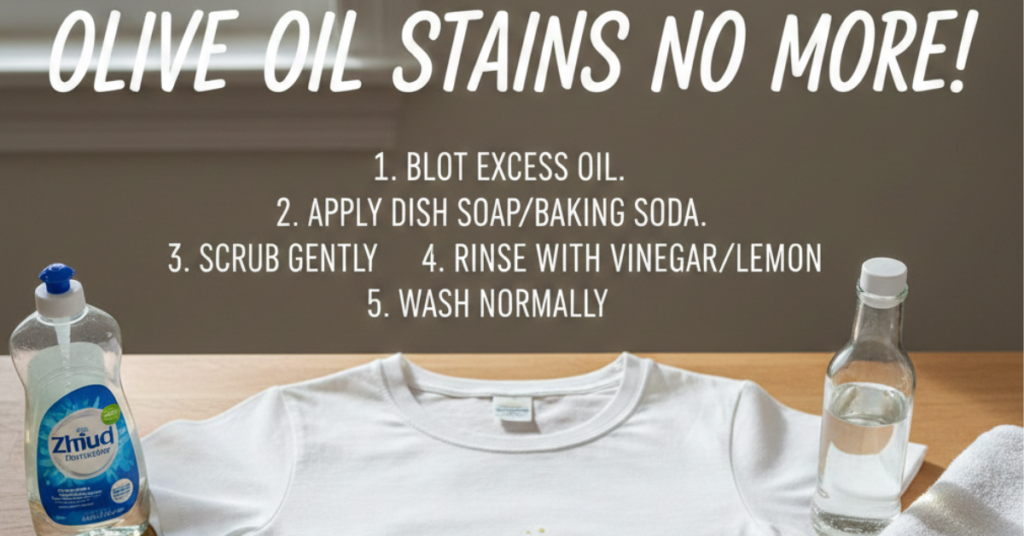
1. Blot the Excess Oil Immediately
As soon as the spill happens:
-
Blot gently with a paper towel or clean cloth
-
Do not rub, as that pushes oil deeper into the fabric
This step alone can prevent a small stain from becoming permanent.
2. Absorb Oil with Powdered Materials
Before using water, absorb as much oil as possible.
Best options include:
-
Baking soda
-
Cornstarch
-
Baby powder
How to use:
-
Sprinkle generously over the stain
-
Let sit for 15–30 minutes
-
Brush off gently
These powders pull oil out of fabric fibers naturally.
3. Apply Dish Soap (Grease Fighter)
Dish soap is designed to break down oils—perfect for olive oil stains.
Steps:
-
Apply a few drops of liquid dish soap directly on the stain
-
Gently massage with fingers or a soft brush
-
Let sit for 10 minutes
-
Rinse with warm (not hot) water
Wash the garment as usual afterward.
How to Get Olive Oil Out of Clothes After Drying
If the stain has already gone through the dryer, don’t lose hope.
Step-by-Step for Dried Olive Oil Stains
-
Apply dish soap generously to the stained area
-
Gently scrub with a toothbrush
-
Let sit for 20–30 minutes
-
Rinse thoroughly
-
Wash again in warm water
Check before drying again—heat will lock the stain in permanently.
Oxygen-Based Stain Removers
For stubborn, set-in stains:
-
Use a color-safe oxygen bleach
-
Soak according to product instructions
-
Ideal for cotton, polyester, and blends
These penetrate deep grease stains without damaging fabric.
What Not to Do with Olive Oil Stains
Avoid these common mistakes:
-
Using hot water first
-
Putting the garment in the dryer before checking
-
Using bleach on grease stains
-
Rubbing aggressively
Each of these can make the stain harder—or impossible—to remove.
Fabric-Specific Tips
-
Cotton & Denim: Respond well to dish soap and baking soda
-
Silk & Wool: Use cornstarch only; avoid scrubbing
-
Synthetic Fabrics: Dish soap works best
Always test treatments on an inside seam first.
FAQs: Olive Oil Stain Removal
Can olive oil stains come out after washing?
Yes, as long as the stain hasn’t been dried with heat. Reapply dish soap and wash again.
Does baking soda really remove olive oil stains?
Yes. Baking soda absorbs oil effectively, especially when applied early.
Can vinegar remove olive oil from clothes?
Vinegar helps neutralize odors but isn’t strong enough alone for grease. Use it with dish soap.
How long should dish soap sit on the stain?
10–30 minutes is ideal, depending on how old the stain is.
Are olive oil stains permanent?
Not usually. With proper treatment, even dried stains can often be removed.
Conclusion: Olive Oil Stains Don’t Have to Win
Knowing how to get olive oil out of clothes, even after drying, can save your favorite outfits and your wallet. The key is acting quickly, using oil-absorbing powders, and relying on dish soap to break down grease.