
Few things are more frustrating than spotting a greasy oil stain on your favorite shirt—especially after it’s already been washed. If you’re searching for how to get oil stains out of clothing, you’re not alone. Oil binds tightly to fabric fibers, which makes it stubborn, but not impossible, to remove.
The good news? With the right approach and a little patience, you can lift even set-in oil stains without damaging your clothes. Let’s walk through what really works.
Why Oil Stains Are So Hard to Remove
Oil stains don’t dissolve in water, which is why a normal wash cycle often makes them worse. Once heat is applied—especially in the dryer—the oil bonds more deeply to the fabric.
That’s why acting quickly and avoiding heat until the stain is gone is key.
How to Get Oil Stains Out of Clothes Quickly
When time matters, these methods deliver fast results.
1. Dish Soap Method (Best First Step)
Dish soap is designed to cut through grease, making it one of the most effective solutions.
Steps:
-
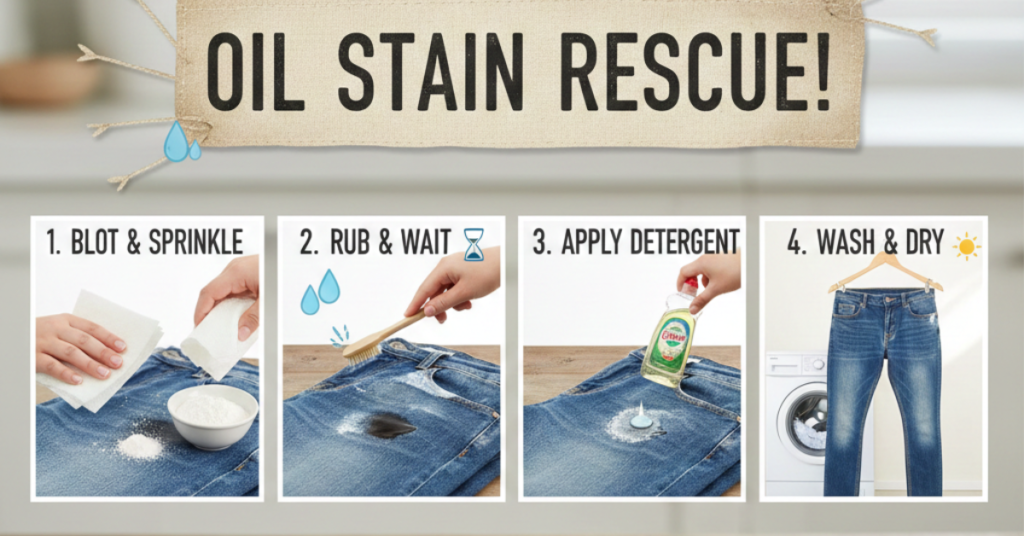
Blot excess oil with a paper towel
-
Apply a few drops of liquid dish soap
-
Gently rub into the stain
-
Rinse with warm water and air-dry
Works well on fresh stains
Safe for most fabrics
2. Baking Soda or Cornstarch Absorption
Great for oily splashes that haven’t fully set.
-
Sprinkle baking soda or cornstarch over the stain
-
Let it sit for 15–30 minutes
-
Brush off gently
-
Wash normally
This method pulls oil out before it settles deep into fibers.
How to Get Oil Stains Out of Clothes After Washing
If you’ve already washed the garment, don’t panic—there’s still hope.
3. Dish Soap + Warm Water Rewash
For how to get oil stains out of clothes after washing, this is your best bet.
-
Apply dish soap directly to the dry stain
-
Let it sit for 10–15 minutes
-
Rewash in the warmest water safe for the fabric
Skip the dryer until the stain is completely gone.
4. Vinegar and Baking Soda Combo
This combo helps break down lingering residue.
-
Sprinkle baking soda on the stain
-
Spray lightly with white vinegar
-
Let fizz for 10 minutes
-
Wash as usual
How to Get Oil Stains Out of Clothes After Drying
Heat makes oil stains more stubborn—but not permanent.
5. Repeat Dish Soap Treatment
For how to get oil stains out of clothes after drying, persistence is key.
-
Saturate the stain with dish soap
-
Gently scrub with a soft toothbrush
-
Wash and air-dry
-
Repeat if needed
Multiple treatments often work better than one aggressive attempt.
Best Methods by Fabric Type
-
Cotton: Dish soap + warm wash
-
Denim: Baking soda pre-treatment
-
Synthetic fabrics: Dish soap + vinegar
-
Delicates: Cornstarch absorption + gentle wash
Always test treatments on a hidden area first.
What Not to Do
Avoid these common mistakes:
-
Putting stained clothes in the dryer
-
Using bleach on oil stains
-
Scrubbing aggressively on delicate fabrics
-
Ignoring stains before washing
These steps can permanently set the stain.
FAQs: How to Get Oil Stains Out of Clothing
Can oil stains be removed after drying?
Yes, but it may take multiple dish soap treatments and rewashing.
Does baking soda really remove oil stains?
Yes, it absorbs oil effectively when used early.
Is vinegar safe for clothes?
White vinegar is safe for most fabrics and helps break down grease.
Why do oil stains reappear after washing?
Heat from washing or drying can reveal oil residue left behind.
Can I use shampoo instead of dish soap?
Yes—shampoo designed for oily hair can help in a pinch.
Conclusion: Oil Stains Don’t Have to Be Permanent
Learning how to get oil stains out of clothing is all about timing, technique, and patience. Whether the stain is fresh, washed, or even dried, using grease-cutting solutions like dish soap, baking soda, and vinegar can restore your clothes.
Before tossing that stained shirt, give these methods a try—you might be surprised how well they work.