
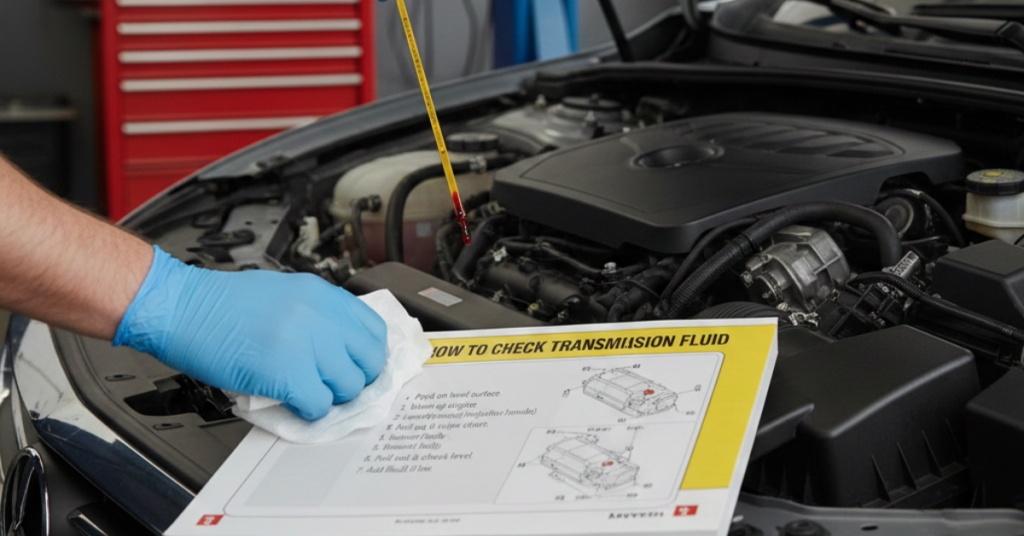

oEver notice rough shifting, strange noises, or delayed acceleration? Those could be signs your transmission fluid needs attention. Knowing how to check transmission fluid is one of the easiest ways to protect your vehicle and avoid expensive repairs.
In this guide, we’ll walk through how to check transmission fluid level, whether your car has a dipstick or not, and cover popular vehicles like the Ford F-150, Nissan Altima, and Chevy Silverado. No mechanic jargon—just clear, practical advice.
Why Checking Transmission Fluid Is So Important
Transmission fluid keeps your transmission cool, lubricated, and shifting smoothly. Low or dirty fluid can cause:
-
Slipping gears
-
Hard or delayed shifts
-
Overheating
-
Long-term transmission damage
Regularly learning how to check transmission fluid level helps catch issues early—before they turn into costly repairs.
What You’ll Need Before You Start
Before checking your transmission fluid, gather these basics:
-
Clean rag or paper towel
-
Owner’s manual (important for newer vehicles)
-
Gloves (optional but helpful)
Always park on a level surface and follow manufacturer instructions for accuracy.
How to Check Transmission Fluid With a Dipstick
Many older and some modern vehicles still include a dipstick.
Step-by-Step Instructions
-
Start the engine and let it warm up
-
Shift through all gears, then park
-
Locate the transmission fluid dipstick
-
Pull it out, wipe clean, and reinsert
-
Pull again and check the fluid level
This is the most traditional way to check transmission fluid dipstick readings.
What the Fluid Should Look Like
-
Color: Bright red or pink
-
Smell: Neutral or slightly sweet
-
Texture: Smooth, not gritty
Dark, burnt-smelling fluid means it’s time for service.
How to Check Transmission Fluid Without a Dipstick
Many newer vehicles are sealed systems, which can feel intimidating at first.
How It Works
-
Fluid is checked through a fill or inspection plug
-
Vehicle must be level and at operating temperature
-
Some checks require a scan tool
If you’re unsure, this is one situation where a professional inspection is smart. Still, understanding how to check transmission fluid without dipstick helps you know what to expect.
Vehicle-Specific Transmission Fluid Checks
How to Check Transmission Fluid F150
-
Most newer F-150 models don’t have a dipstick
-
Fluid is checked through a fill plug underneath
-
Ford recommends professional checks for accuracy
And How to Check Transmission Fluid Nissan Altima
-
Older Altimas have dipsticks
-
Newer models with CVT transmissions are sealed
-
Always use Nissan-approved CVT fluid
How to Check Transmission Fluid Chevy Silverado
-
Some models have dipsticks; others don’t
-
Check with engine running and warm
-
Silverado transmissions are sensitive to fluid level
Always confirm with your owner’s manual for best results.
How Often Should You Check Transmission Fluid?
A good rule of thumb:
-
Every 30,000–60,000 miles
-
Before long road trips
-
If you notice shifting issues
Regular checks make how to check transmission fluid level part of routine car care.
Common Mistakes to Avoid
Avoid these errors when checking transmission fluid:
-
Checking when the engine is cold
-
Using the wrong fluid type
-
Overfilling the transmission
-
Ignoring warning signs
Transmission systems are precise—accuracy matters.
FAQs: How to Check Transmission Fluid
Can I check transmission fluid myself?
Yes, especially if your vehicle has a dipstick. Sealed systems may require a shop visit.
How do I know if my transmission fluid is low?
Slipping gears, delayed shifting, and strange noises are common signs.
Is transmission fluid the same as engine oil?
No. They serve different purposes and are not interchangeable.
Can driving with low transmission fluid damage my car?
Absolutely. Low fluid can cause overheating and permanent transmission damage.
How long does it take to check transmission fluid?
With a dipstick, usually under 10 minutes.
Conclusion: A Small Check That Makes a Big Difference
Learning how to check transmission fluid is a simple habit that can save you thousands in repairs. Whether you’re checking a dipstick or understanding a sealed system, staying informed puts you in control of your vehicle’s health.