
Introduction
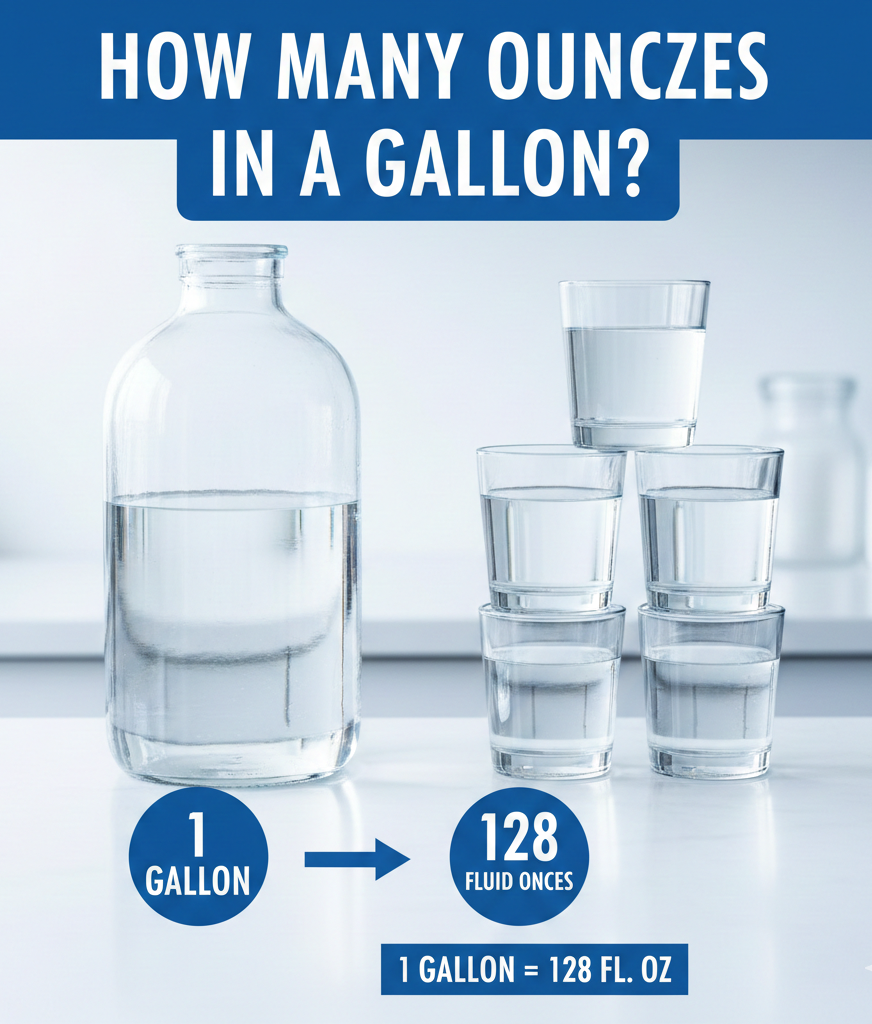
Have you ever stood in your kitchen holding a measuring cup and wondered, how many ounces in a gallon? You’re not alone. This is one of those everyday questions that pops up when cooking, tracking water intake, or dealing with measurements at work or school. In this guide, we’ll break it down in plain English—no math headaches, no confusing jargon—just clear, accurate answers you can actually remember.
How Many Ounces in a Gallon?
In the United States measurement system:
1 gallon = 128 ounces
That’s it. Simple, clean, and easy to memorize.
So whether you’re measuring juice, milk, or figuring out your daily hydration goal, a gallon always equals 128 fluid ounces in the U.S.
How Many Ounces in a Gallon of Water?
When it comes to water, the answer stays the same:
1 gallon of water = 128 ounces
Water doesn’t change the measurement—it only changes the weight, not the volume. This is why fitness experts often say things like “drink a gallon of water a day,” which means drinking 128 ounces of water over the course of the day.
Why People Get Confused About Gallons and Ounces
The confusion usually comes from two main issues:
1. Different Measurement Systems
-
U.S. gallon: 128 ounces
-
UK (Imperial) gallon: 160 ounces
If you’re reading a recipe or guide from outside the U.S., this difference matters.
2. Fluid Ounces vs. Weight Ounces
-
Fluid ounces (fl oz) measure volume
-
Ounces (oz) can also measure weight
When we talk about gallons, we always mean fluid ounces, not weight.
Quick Reference Conversion Chart
Here’s a handy breakdown to make life easier:
-
1 gallon = 128 ounces
-
½ gallon = 64 ounces
-
¼ gallon = 32 ounces
-
1 cup = 8 ounces
-
16 cups = 1 gallon
This chart is especially useful for cooking, baking, and meal prepping.
How Many Ounces Are in a Gallon Compared to Other Containers?
To put it into everyday perspective:
-
Standard water bottle (16 oz): 8 bottles = 1 gallon
-
Large sports bottle (32 oz): 4 bottles = 1 gallon
-
Reusable jug (64 oz): 2 jugs = 1 gallon
This makes it much easier to track water intake without measuring cups.
Common Everyday Uses for Gallon-to-Ounce Conversions
Knowing how many ounces in a gallon comes in handy more often than you might think:
-
Cooking and baking: Scaling recipes up or down
-
Hydration tracking: Meeting daily water goals
-
Cleaning solutions: Mixing proper ratios
-
Fuel or chemicals: Accurate liquid measurements
Once you know the 128-ounce rule, everything else becomes simpler.
U.S. Gallon vs. Imperial Gallon: Know the Difference
This is important if you deal with international recipes or measurements.
| Measurement Type | In a Gallon |
|---|---|
| U.S. Gallon | 128 oz |
| Imperial Gallon | 160 oz |
Always check which system is being used to avoid mistakes.
Easy Trick to Remember It Forever
Here’s a simple memory trick:
-
A gallon has 4 quarts
-
Each quart has 32 ounces
-
4 × 32 = 128 ounces
Once you remember “32 ounces per quart,” the rest falls into place.
FAQs
How many units in a gallon of water in the U.S.?
A U.S. gallon of water contains 128 fluid ounces.
Is a gallon always 128 ounces?
In the U.S., yes. In the UK (Imperial system), a gallon equals 160 ounces.
Does milk or juice change the ounce measurement?
No. A gallon is always a volume measurement. Liquids like milk, juice, or water all measure 128 ounces per gallon.
How many 16-ounce bottles make a gallon?
Eight 16-ounce bottles equal one gallon.
Conclusion
So now you know the clear and simple answer to how many ounces in a gallon: 128 ounces, every time, in the U.S. Whether you’re tracking hydration, cooking at home, or just satisfying your curiosity, this one fact can save you a lot of confusion. Keep this guide handy, and if you found it useful, explore related measurement tips to make everyday tasks even easier.