
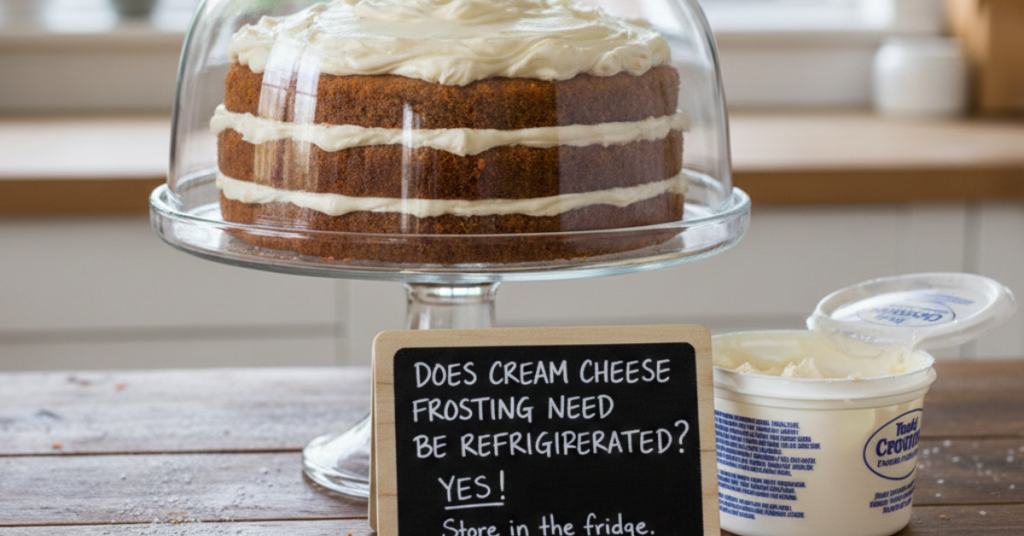

You’ve frosted a beautiful cake, stepped back to admire it, and then the big question hits: does cream cheese frosting need to be refrigerated? It’s one of the most searched baking questions—and for good reason.
Cream cheese frosting sits right in that gray area between “safe on the counter” and “needs the fridge.” In this guide, we’ll break it all down so you can store your frosting (and desserts) safely without sacrificing taste or texture.
Why Cream Cheese Frosting Storage Matters
Cream cheese frosting is made with dairy, which means it’s more sensitive than buttercream or powdered-sugar glazes. Improper storage can lead to:
-
Food safety risks
-
Spoilage or sour smells
-
Changes in texture and consistency
Knowing how long it can safely sit out helps protect both your dessert and anyone eating it.
Does Cream Cheese Frosting Need to Be Refrigerated?
The Short Answer: Yes, Most of the Time
So, does cream cheese frosting need to be refrigerated? In most cases, yes. Because cream cheese is a soft, high-moisture dairy product, it’s more prone to bacterial growth at room temperature.
General rule:
-
Room temperature: Up to 2 hours (sometimes 4 hours in cool conditions)
-
Refrigerated: Up to 5–7 days
If your frosting contains real cream cheese (not shelf-stable alternatives), refrigeration is the safest choice.
How Long Can Cream Cheese Frosting Sit Out?
Short Periods Are Okay—Longer Ones Aren’t
Cream cheese frosting can sit out briefly during:
-
Cake decorating
-
Serving at a party
-
Short photo sessions
However, once it’s been out for more than a couple of hours, it should go back in the fridge. Warm rooms speed up spoilage significantly.
Does a Cake With Cream Cheese Frosting Need Refrigeration?
Yes, Especially After Serving
A fully frosted cake with cream cheese frosting should be refrigerated when not being served. This helps:
-
Prevent bacterial growth
-
Maintain frosting structure
-
Extend freshness
Before serving, let the cake sit at room temperature for 20–30 minutes so the frosting softens naturally.
What About Store-Bought Cream Cheese Frosting?
Some commercial frostings contain stabilizers and preservatives. These may be safe at room temperature before opening, but once opened or used on a cake, refrigeration is still recommended.
Always check the label for storage instructions.
How to Store Cream Cheese Frosting Properly
Best Storage Practices
To keep frosting fresh and safe:
-
Store in an airtight container
-
Refrigerate immediately after use
-
Label with the date made
If frosting stiffens in the fridge, let it sit out briefly and re-whip before using.
Signs Cream Cheese Frosting Has Gone Bad
Throw it away if you notice:
-
Sour or fermented smell
-
Watery separation
-
Mold or discoloration
-
Bitter or “off” taste
When in doubt, it’s better to discard than risk food poisoning.
FAQs About Cream Cheese Frosting Storage
Does cream cheese frosting need to be refrigerated overnight?
Yes. Overnight refrigeration is recommended for safety and freshness.
Can cream cheese frosting be frozen?
Yes. Freeze in an airtight container for up to 2 months. Thaw in the fridge before use.
Is it safe to leave cream cheese frosting out overnight?
No. Leaving it out overnight increases the risk of bacterial growth.
Does cream cheese frosting harden in the fridge?
It firms up slightly but softens quickly at room temperature.
Can I travel with a cake that has cream cheese frosting?
Yes, but keep it cool with ice packs and limit travel time.
Conclusion: So, Does Cream Cheese Frosting Need Refrigeration?
To wrap it up—does cream cheese frosting need to be refrigerated? Yes, in most situations. While it can sit out briefly during serving, refrigeration is the safest way to preserve freshness and prevent spoilage.